4 Helpful Teaching Strategies for Students on the Autism Spectrum
|
Getting your Trinity Audio player ready...
|
Introduction
As a school psychologist and behavior specialist with over over two decades of experience, I’ve supported hundreds of students—including many with Autism Spectrum Disorder (ASD)—in classrooms, specialized programs, and community settings. If there’s one truth I’ve learned, it’s this:
Students with ASD don’t need more complicated instruction—they need clearer, structured instruction.
When we shift the way we teach, their entire learning experience can change. This article breaks down the simple, research-backed strategies that help ASD learners thrive—and shares a real story of a student whose entire relationship with learning changed because of them.
Why Some Academic Tasks Don’t Work for ASD Students
People on the autism spectrum—especially those with communication challenges—often struggle with tasks that are visually overwhelming, open-ended, verbally heavy, or unpredictable. But with a few intentional adjustments, those same tasks can become motivating, meaningful, and accessible.
Here’s what really helps:
1. Visual Structure Makes Learning Predictable and Powerful
ASD learners benefit enormously from tasks that include visual supports, such as picture guides, sequential steps, examples, or color-coded materials. Visuals reduce anxiety, increase understanding, and support independence—even for students with minimal verbal language.
2. A Clear Beginning and Ending Builds Confidence
Students on the autism spectrum often stay more focused and confident when a task has a clear start and finish. Using visual cues—such as sorting colored bear counters into matching bowls—shows exactly what needs to be done and when the activity is complete. In the example below, the child knows the task is finished once all of the bears are placed in their matching bowls. This is just one example of the beginning/ending strategy, which can be used to teach a wide variety of academic and functional concepts.

3. Reduced Visual Clutter Helps Students Stay Focused
Too much text, too many colors, or too many choices can overload a student’s sensory system. Simplifying materials and creating clean layouts helps ASD learners focus on the essential information without distraction.
4. Less Verbal Language = More Understanding
Students with ASD often process information far better when there is less verbal explanation and more showing. When we talk less and demonstrate more, comprehension increases, frustration decreases, and independence blossoms—especially for non-verbal or minimally verbal students.
Backed by Research, Proven in Practice
Years of autism research—including TEACCH-based frameworks—support the use of visual structure to improve learning, engagement, and independence. I’ve seen these results firsthand throughout my career, but one experience shaped my understanding more than any other.
Matthew’s Story: The Student Who Taught Me the Power of Structure
During my first year as a school psychologist, I worked in a specialized program supporting ASD students with significant communication challenges. One student, Matthew, was a non-verbal 15-year-old who rarely engaged in academic work. Most days, he laid on the floor, uninterested and disconnected.

His teacher worried he simply wasn’t capable of doing anything school related.
But I believed something different:
Matthew didn’t lack ability—he lacked access.
The Turning Point
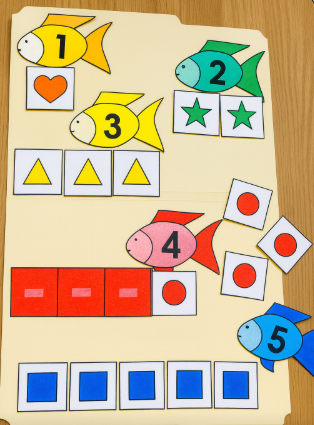
I redesigned his academic activities using the same strategies in this article: clear visual steps, minimal verbal directions, reduced clutter, and a defined beginning and ending.
Within weeks, Matthew’s participation increased. He sat up more. He completed tasks. He demonstrated understanding none of us had seen before. For the first time, school made sense to him.
Watching him engage—on his terms and at his pace—changed me forever.
The Big Message: Every ASD Student Can Learn With the Right Structure
Matthew’s story isn’t an exception. It’s a reminder.
Students on the spectrum are capable, intelligent, and often eager to learn—when instruction is designed with their unique needs in mind.
To support ASD learners:
Most importantly:
Match the instruction to the student—not the other way around.
Conclusion: Let’s Make Learning Accessible for Every Child
When we use structured, visual, supportive teaching strategies, we do more than help students complete tasks—we give them a way to understand the world.
Every child on the autism spectrum deserves that chance.
Let’s continue working together—educators, parents, and specialists—to make learning a positive, accessible experience for all students, including those with Autism Spectrum Disorder.
Research-Based References
- Bryan, L. C., & Gast, D. L. (2000). Teaching on-task behaviors to students with autism using a photo activity schedule. Journal of Autism and Developmental Disorders, 30(6), 553–567. https://doi.org/10.1023/A:1005687310346
- Dettmer, S., Simpson, R. L., Myles, B. S., & Ganz, J. B. (2000). The use of visual supports to facilitate transitions of students with autism. Focus on Autism and Other Developmental Disabilities, 15(3), 163–169. https://doi.org/10.1177/108835760001500307
- Hume, K., Loftin, R., & Lantz, J. (2009). Increasing independence in autism spectrum disorders: A review of three focused interventions. Journal of Autism and Developmental Disorders, 39, 1329–1338. https://doi.org/10.1007/s10803-009-0751-2
- Mesibov, G. B., Shea, V., & Schopler, E. (2005). The TEACCH approach to autism spectrum disorders. Springer.
https://www.researchgate.net/publication/316273340_The_Teacch_Approach_to_Autism_Spectrum_Disorders - Quill, K. A. (1997). Instructional considerations for young children with autism: The rationale for visually cued instruction. Journal of Autism and Developmental Disorders, 27(6), 697–714. https://doi.org/10.1023/A:1025806900162
- Wong, C., Odom, S. L., Hume, K., Cox, A. W., et al. (2015). Evidence-based practices for children, youth, and young adults with autism spectrum disorder. Journal of Autism and Developmental Disorders, 45, 1951–1966. https://doi.org/10.1007/s10803-014-2351-z

Rachel Wise is the author and founder of Education and Behavior. Rachel created Education and Behavior in 2014 for adults to have an easy way to access research-based information to support children in the areas of learning, behavior, and social-emotional development. As a survivor of abuse, neglect, and bullying, Rachel slipped through the cracks of her school and community. Education and Behavior hopes to play a role in preventing that from happening to other children. Rachel is also the author of Building Confidence and Improving Behavior in Children: A Guide for Parents and Teachers.
"Children do best when there is consistency within and across settings (i.e., home, school, community). Education and Behavior allows us to maintain that consistency."
Releated Topics